
Every asset deserves proactive care. We automate it.



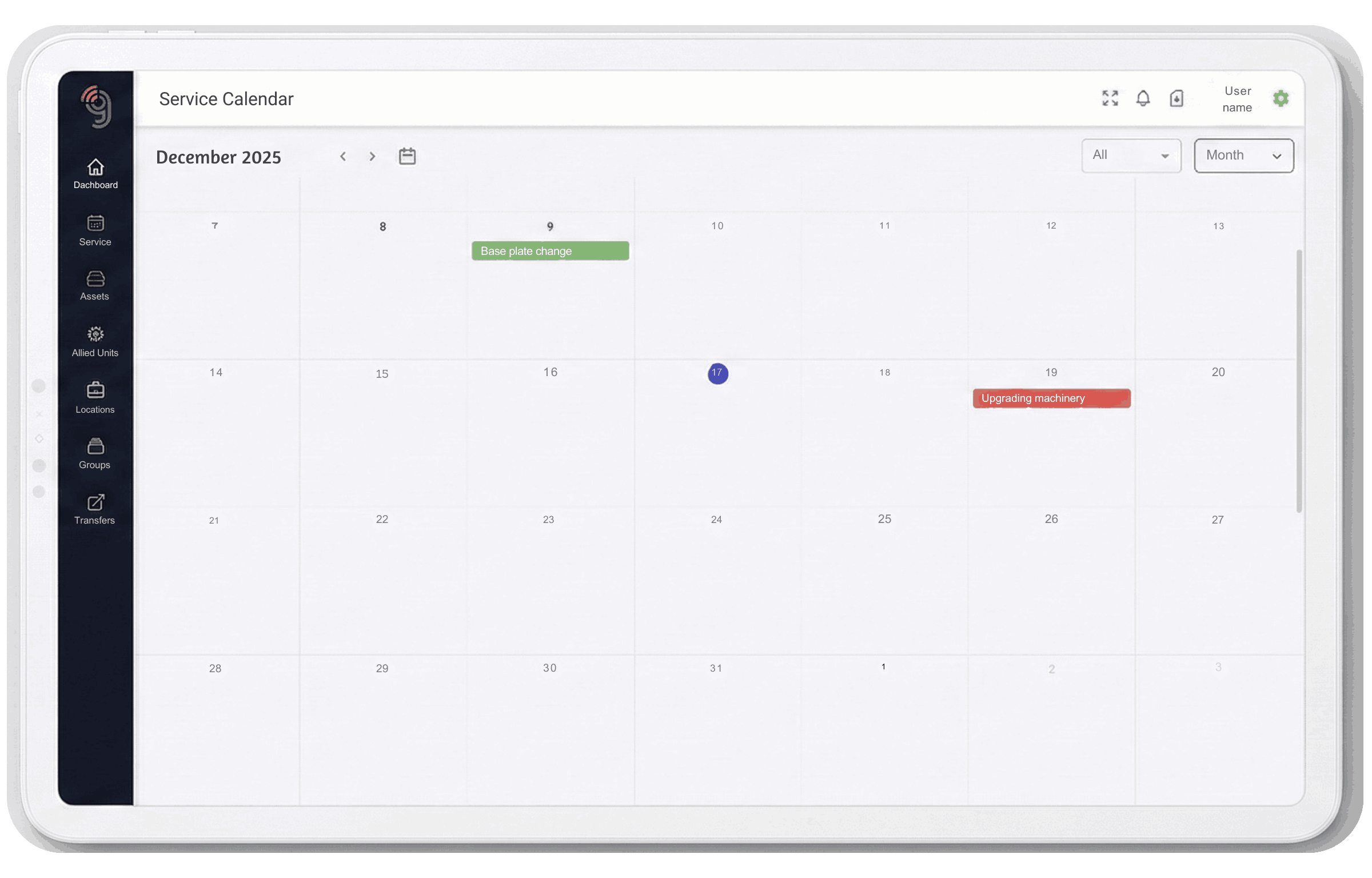
Enterprises frequently struggle to keep track of maintenance schedules, service expenses, and end-of-life decisions for their assets. Without automation, high-value equipment is prone to avoidable downtime, inefficient vendor management, and unexpected failures. AssetGrip’s Service, Maintenance & Asset Lifecycle Automation ensures that every asset receives timely, appropriate care, whether in plants, warehouses, or SEZ/EOU units.
Our solution shifts organizations from reactive maintenance to automated, full cost transparency and seamless lifecycle management from acquisition to disposal.
1. Asset Assessment & Planning: Review all assets’ operational data and historical maintenance logs
2. Maintenance Calendar Setup: Establish alerts for preventive and corrective maintenance across all locations.
3. Execution & Recording: Field teams log service events, repairs, and replacements digitally via mobile app or desktop interface.
4. Cost & Vendor Tracking: All service costs are recorded, analyzed, and stored for reporting and audits.
5. Lifecycle Management: Combine usage, maintenance, and condition data to make informed decisions for replacement or disposal.
Timely maintenance ensures assets run efficiently, avoiding unexpected failures.
Evaluate performance and costs to choose the most reliable service partners.
Predictive Timely schedules and condition monitoring extend operational lifespan.
Comprehensive logs support regulatory compliance and internal audits.
It is a digital solution that automates asset servicing, maintenance schedules, and lifecycle management from acquisition to disposal.
By enabling preventive maintenance, automated alerts, and timely service tracking, the system minimizes unexpected breakdowns.
Yes, all service activities, maintenance records, and asset history are centralized for complete visibility and accountability.
Absolutely—it supports scheduled maintenance and data-driven insights to anticipate service needs before failures occur.
Manufacturing, facilities management, logistics, healthcare, and asset-intensive enterprises benefit from improved reliability and efficiency.