Most companies think they know what they own. What they rarely know is what those assets are doing, when they run, where they sit, how often they break down, and whether they’re still worth what the books claim.
AssetGrip started because our founder watched teams fight spreadsheets and deadlines while high-value machines quietly slipped off the radar. We built a system so assets no longer hide. They report.
Asset Inventory, Tracking & Valuation at Assetopia transforms chaotic registers into a living Fixed Asset Register (FAR), one that’s tag-verified, audit-ready, and continuously updated with condition and usage intelligence.
1. Discovery & Planning: Map locations, asset groups, and stakeholders. Define tagging standards (QR vs RFID) and align FAR categories with accounting policy.
2. On-site Verification & Tagging: Field teams do physical walkthroughs: attach non-tear QR/RFID tags, photograph serials, capture model/usage, and record custodians. Tags are placed tamper-proof and logged to CAMS.
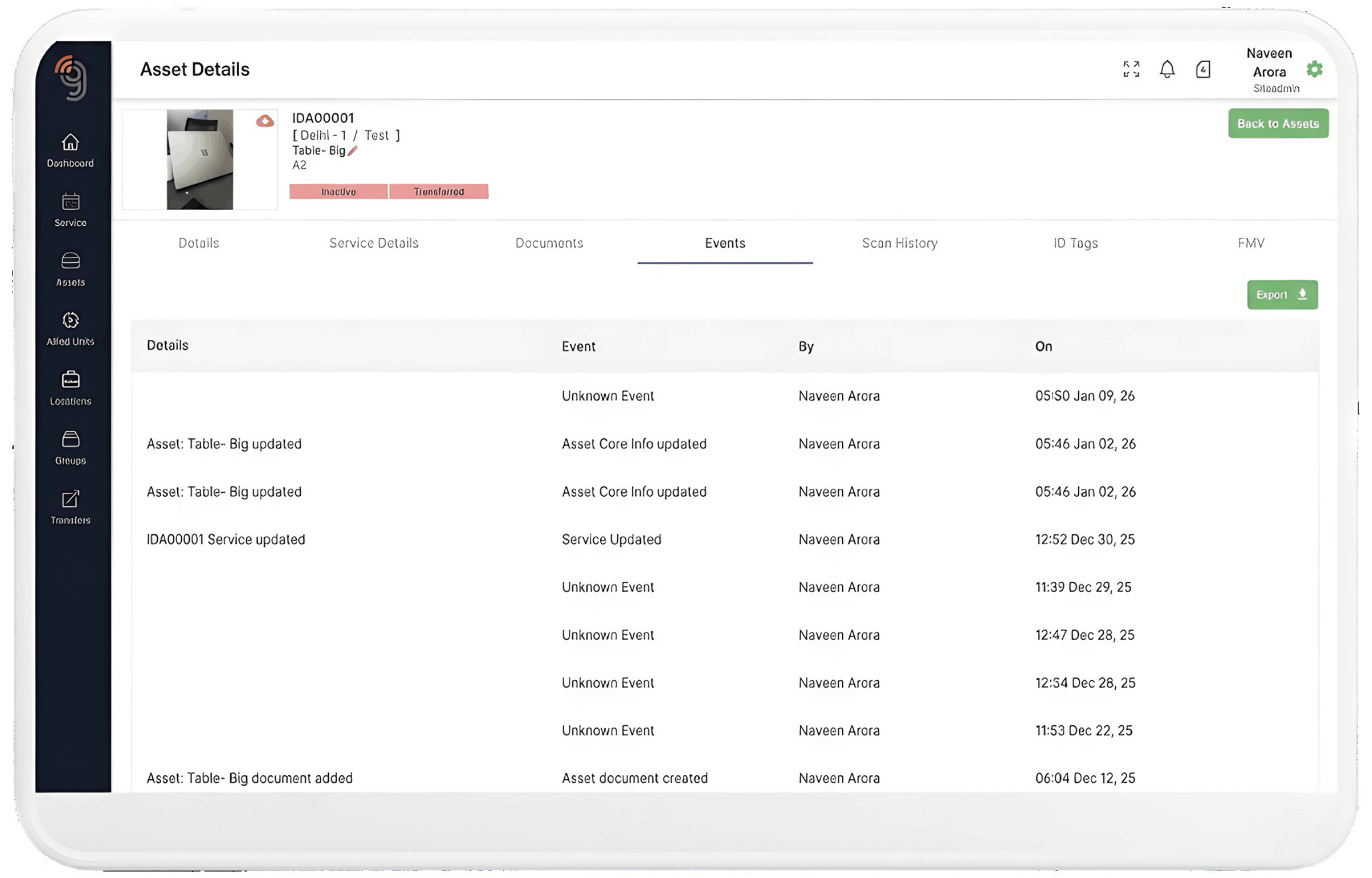
3. Digital Onboarding: Each scanned asset becomes a digital twin in AssetGrip, recording location, condition, purchase cost, warranty, and linked documentation.
4. Data Enrichment: IoT sensors or manual logs feed usage cycles, temperature/vibration alerts, and maintenance events into each asset’s history.
5. Valuation & Depreciation Intelligence: FAR and live data feed valuation models (straight-line, WDV, custom policies). Depreciation schedules auto-adjust with condition and utilization metrics.
6. Reconciliation & Audit: Automated matching between book records and physical inventory, discrepancies flagged, ghost assets identified, and reconciliation reports generated for auditors.
Find ghost/duplicate assets and recover asset value.
Identify assets to refurbish vs replace using real usage and health
Produce tamper-proof, traceable FARs
for auditors and regulators.
Reduce downtime and unnecessary purchases through utilization visibility.
Accurate valuation and digital evidence accelerate bonding/de-bonding processes.
It is a digital solution that centralizes asset records, automates tracking, and streamlines asset-related workflows.
The platform provides real-time status, location, and ownership data, ensuring accurate and up-to-date asset visibility.
Yes, automation eliminates spreadsheets and manual updates, reducing errors and improving operational efficiency.
Absolutely — assets can be tracked from acquisition to disposal, including usage, maintenance, and movement history.
Asset-intensive industries such as manufacturing, logistics, healthcare, IT, and infrastructure gain the most value.